CharlieMoger.com

Marketing and advertising advice for owner-operated businesses

  • Home
  • About me
  • My work
    • MogerMedia
    • Wizard of Ads
  • Contact
You are here: Home / Archives for Messaging

How effective are your ads at chasing off customers?

Good advertising chases off customers. How much do you care if penny-pinching, nit-picking, deal-shoppers are offended by your message? Inflict them on your competitors. Your core customers, the ones who stick with you, will love you sending the weasels packing.

“This is Alabama. We speak English,” says the tv ad for gubernatorial candidate Tim James. “If you want to live here, learn it.”


Predictable shock waves rolled across the national consciousness when his ad first ran. How dare he say that? How narrow-minded. How exclusionary! How brilliant.

Discrimination is the mark of good advertising

Shock and awe is political advertising’s stock and trade. A deeper look reveals a profitable lesson for you: political advertising is to marketing what poetry is to literature: it evokes a response, inspires action, and does so with the greatest possible economy. It has to.
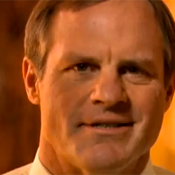
Tim James

Mr. James is talking about more than language. He’s evoking an attitude of “them” and “us,” of “in” and “out.” He’s hoisting a banner to rally voters who prize Alabama’s culture. Isn’t he being discriminatory? You bet. That’s the point. If you don’t like what he’s selling, you’re not his voter. You probably wouldn’t be anyway.

Good advertising disqualify the unqualified. The slight downside: most people don’t like being disqualified. But, those who do qualify will find greater affinity with you. Congratulations. You’ve created an in-group.

Taking a stand demands nerve and backbone

I’m not saying Tim James is right or wrong. Voters will make that determination. Advertising isn’t a forum for debate any more than it’s a tool for education. It’s a mix of carrot and stick created for one purpose: move you into action.

James has nothing to lose. The June 1st runoff is coming fast. Bradley Byrne, a former State Senator, is the front runner among all candidates–on both sides. It’s put up or shut up time in the race. And, James has gone all-in on a message that’s generated over a million YouTube views its first week. Want to see it?

Profit from these political ad principles

Before you watch his ad at the bottom of this story, consider how these five principles of political advertising would impact your marketing:

  1. It’s not what they’re selling, it’s how they’re doing it

    Political ads take a stand, build a case, call for choice. What part of that is bad? If you can’t describe in five words or less why you’re running an ad, don’t. Case in point: Martha Coakley’s  horrible everything-for-everyone ad. Running ads without a clear purpose is like taking a road trip without a map. Burn gas. Get nowhere.

  2. Speak in plain language your answer to questions asked

    Politicians speak to what voters care about. James Carville’s “it’s the economy, stupid” credo echoed in every Clinton ad, making Bush’s bland message of consistency and experience look flaccid by comparison. Forget what’s important to you. Advertise what matters to customers.

  3. Express what you oppose in balance with what you support

    Polite doesn’t sell. Don’t be rude. Be direct. Draw the line. “We’re not the cheapest. Neither are our customers,” draws a line. “Our customers appreciate our work. They know how expensive cheap service can be.” Say it with swagger and be noticed. It worked for Scott Brown. Even more so for LBJ. His Daisy spot crushed Goldwater in one minute.

  4. Keep it fresh, but keep on message: be one thing

    What is the one thing that draws customers to you? Promote that. Put it in every ad. The family occupying The White House rode there on one word. A campaign uses many messages, but it revolves around one idea. What’s yours?

  5. When an ad breaks from the pack, ride it hard and far

    Create multiple ads, variations on your theme. Rotate them. But, when one really rings the bell, ring it loudly. Reagan’s Morning in America still resonates today. When you land on something that moves people, stay with it.

Political advertising has to move the needle quickly. Shouldn’t yours? You can’t charge half a magnet any more than you can create ads that please everyone. Magnets can only attract to the extent they repel. Same goes for your ads. Say who you are. Say it shamelessly. You’ll offend countless people who wouldn’t have done business with you anyway. But, the ones who do will love you for it.

You can’t win big without first taking risks

Will you offend someone? Hope so. Will you get calls complaining about your ads? Only if you do it right. Will you win the hearts, minds (and wallets) of those who connect with your message? As a noteworthy politician often says, “You betcha.”

Because you scrolled this far down, I’m going to share a rare jewel with you. It defies description, but demosntrates how far we’ve come as a culture. What you’re about to see actually generated lift in polls. What response do you suppose this ad would generate today:


[Originally published 1 May 2010]

UPDATE: James lost in the Republican Primary of seven candidates. He missed making the runoff by one-tenth of a point.

What customer experience does your brand deliver?

The marketing of your company shifts into high gear when customers walk in. Advertising attracts, but whether your branding wins or loses is measured by a customer’s tangible experience. Optimizing that moment of truth is is a matter of understanding the variables and managing them.

In retail, customer experience happens at the store. Service businesses, on the other hand, bring it to the customer. In the final installment of our conversation, Mike Dandridge, author of The One-Year Business Turnaround, shares how his Customer Experience Factor applies to service businesses.

[audio:https://charliemoger.com/wp-content/uploads/2010/04/Mike-D-3-REV.mp3|titles=Mike D #3 REV]

Click here for part one of our conversation covering the basics of customer experience. Click here for part two of our conversation including specific examples.

As with retail, seeing the experience through the service customer’s eyes first points you in the right direction.

Are you running for cover or running to win?

Two salesmen are sent to a newly discovered tropic island to sell shoes to natives. The first one writes back, “situation hopeless: no one wears shoes.” The second one writes, “Amazing opportunity: everyone needs shoes.”

It’s an old joke, but it illustrates the different view two companies take of yet-to-be defined land of social media. Which comes closer to reflecting your online engagement?

Clorox: call the attorneys

According to AdAge Magazine, Clorox has “taken the unusual step of advertising for a full-time in-house legal counsel to focus on social media — a rather surprising sign of how entrenched social-media marketing is becoming even for relatively established household products.”

It turns out that a survey of entries on Twitter and Facebook regarding Clorox are for off-label purposes. The possibility of such an entry causing harm and being traced back to a company employee was all it took for Clorox to prepare for the worst. There’s also the unthinkable risk of someone advancing their own interests with the unauthorized use of Clorox.

The company recently ramped up their social media efforts with creation of the Understanding Bleach blog. It’s  squeaky-clean (no pun intended) and hobbled by ad-speak and self-serving video. There’s nothing warm or human here–unless you find it amazing to learn what can be cleaned with “Clorox® Regular Bleach.”

P&G: put the best Facebook forward

That same issue of AdAge carries a story about Proctor & Gamble’s opening of an office in California’s Silicon Valley to better leverage social media–especially Facebook. The company’s goal to reach 5 billion social media consumers worldwide makes Facebook the obvious step.

“P&G sees the value of digital and social media in consumers’ lives and we want to connect with consumers in the environments where they are spending their time,” a P&G spokesperson told the magazine.

While Twitter allows what the company sees as a one-to-many vehicle more akin to television, they see Facebook as a relationship deepener. For example, Tide is offering vintage shirts for sale on their Facebook page with proceeds going to their Loads of Hope benefit for Haiti relief. The brand is plugged into what matters to their customers, allowing them to make a difference.

Clorox, meanwhile, is a sea of “we-we” that  sees the world through a lens of how their product can be used. Even as flu season abates, Clorox continues running a flu-prevention promotion that offers an in-school appearance by an American Idol finalist.

Posture drives headcount

P&G’s Tide brand alone has 310,263 Facebook fans. Meanwhile, Clorox has 69,792 fans for it’s three listings combined. The point is larger than Facebook fan counts; there is a fundamental difference in the approach used by each of the companies and it shapes the relationship being built with their customers. One sees natives in need of shoes while the other is taking precautions against getting kicked. Which approach is reflected in your advertising posture?

Bullies, bites, and buggy whips

WEDNESDAY’S WEEKLY READER

New to adMISSIONs: a weekly sampler of tasty news morsels caught in my net as I troll the web, delivered fresh to you:

95% of customers: a waste of money

4-5% of customers account for most of your business?  That’s what Daisy Whitney says in OMMA magazine. “It’s not what is most efficient, it’s what is most effective. It’s not how big your share of voice is, it’s how important your customers think you are.” Roy H. Williams developed a formula for quantifying effectiveness in his bestselling Secret Formulas of the Wizard of Ads. My partner David Young explains application of Roy’s Advertising Performance Equation.

SEO is killing the web

That’s the upshot of this article by John Dvorak. Rampant SEO strategies, he says, ruins the search experience for users, requiring the search engine folks to constantly work on countermeasures to minimize the impact of SEO techniques.

TV Everywhere bullies you into buying it all

Cable is like a buggy-whip giant in the early days of the car biz: Comcast’s TV Everywhere product offers shows airing on cable and over-the-air TV networks. The catch: you must subscribe to both Comcast and its Internet service. To get what you want, you gotta buy what you won’t use.

You thought we were done with Top 10’s?

Springwise has gathered what they think are the Top Ten business ideas for 2010. Take it from the source: they’re based in Amsterdam. I’m still waiting for wooden shoes to take off.

Watch your mouth: words to avoid in 2010

Word “czars” at Lake Superior State University “unfriended” 15 words and phrases and declared them “shovel-ready” for inclusion on the university’s 35th annual List of Words Banished from the Queen’s English for Mis-use, Over-use and General Uselessness.

Cool app: Visual Thesaurus

A graphical thesaurus displaying unexpected word connections. Great brainstorming tool. Confession: I’m a word geek and love their Word of the Day. While most of the words fly the face of the “use common words uncommonly” rule, stories behind words expose new ideas. If only they had an iPhone app.

Only one thing worse than a foot in your mouth


Sporting over 145 million views, this is the most viewed clip of all time on YouTube. So simple, yet strangely compelling. Consider that next time you’re cooking up an online video: keep it simple and authentic. Unless you want to sound like this guy.

  • « Previous Page
  • 1
  • …
  • 3
  • 4
  • 5
  • 6
  • 7
  • …
  • 16
  • Next Page »

Your intrepid correspondent

I head both MogerMedia, Inc. and Wizard of Ads Gulf Coast, based in Houston, Texas. We develop winning advertising strategies and creative for the best clients on earth.

Grooveyard of posts past

Copyright © 2026 MogerMedia, Inc.